November 7, 2026 · KHTUMEWARE Team
Cabinet Hardware Cost: A Practical Budget Guide
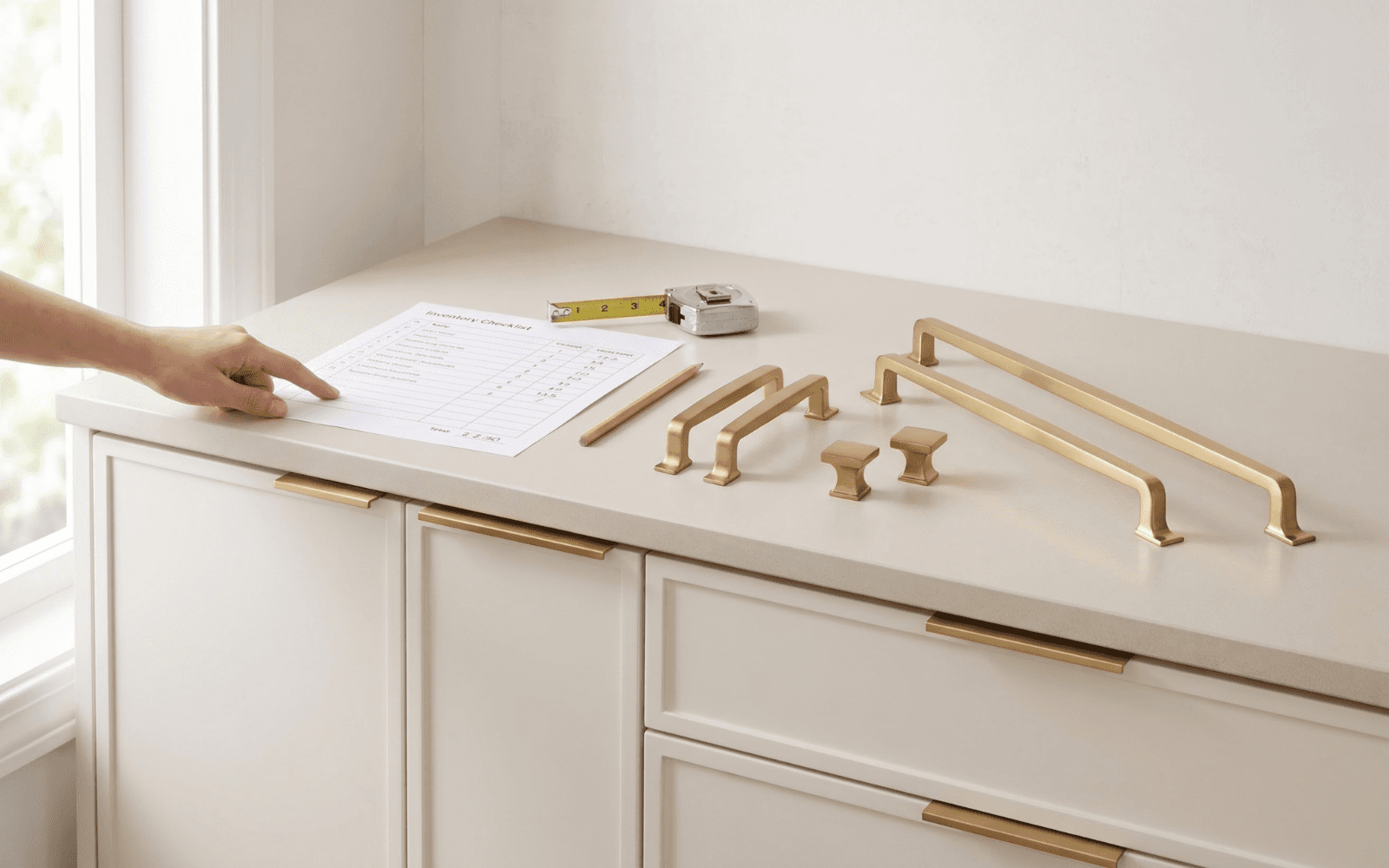
Budget the Whole Project
A few dollars per handle can add up quickly across a kitchen. To work out what you will actually spend, start with a count of your doors and drawers, then add the cost of the packs, delivery, and installation.
Here is how to put together a budget for cabinet knobs, cabinet pulls, and appliance pulls without overlooking the smaller costs. Use the price for your chosen size, finish, and pack quantity when filling in your list.
Count Every Opening
Make a simple list of every door and drawer that needs hardware. Note its location, the number of pieces needed, your preferred finish, and any existing mounting holes. For pulls, measure the center-to-center hole spacing (CTC). For knobs, note the overall dimensions and how far they project from the cabinet. List appliance panels separately.
Count handles as well as doors and drawers. A wide drawer may use one pull or a pair, depending on your layout. Walk through the room with your list so you do not miss a small drawer, a pantry door, or an appliance panel.
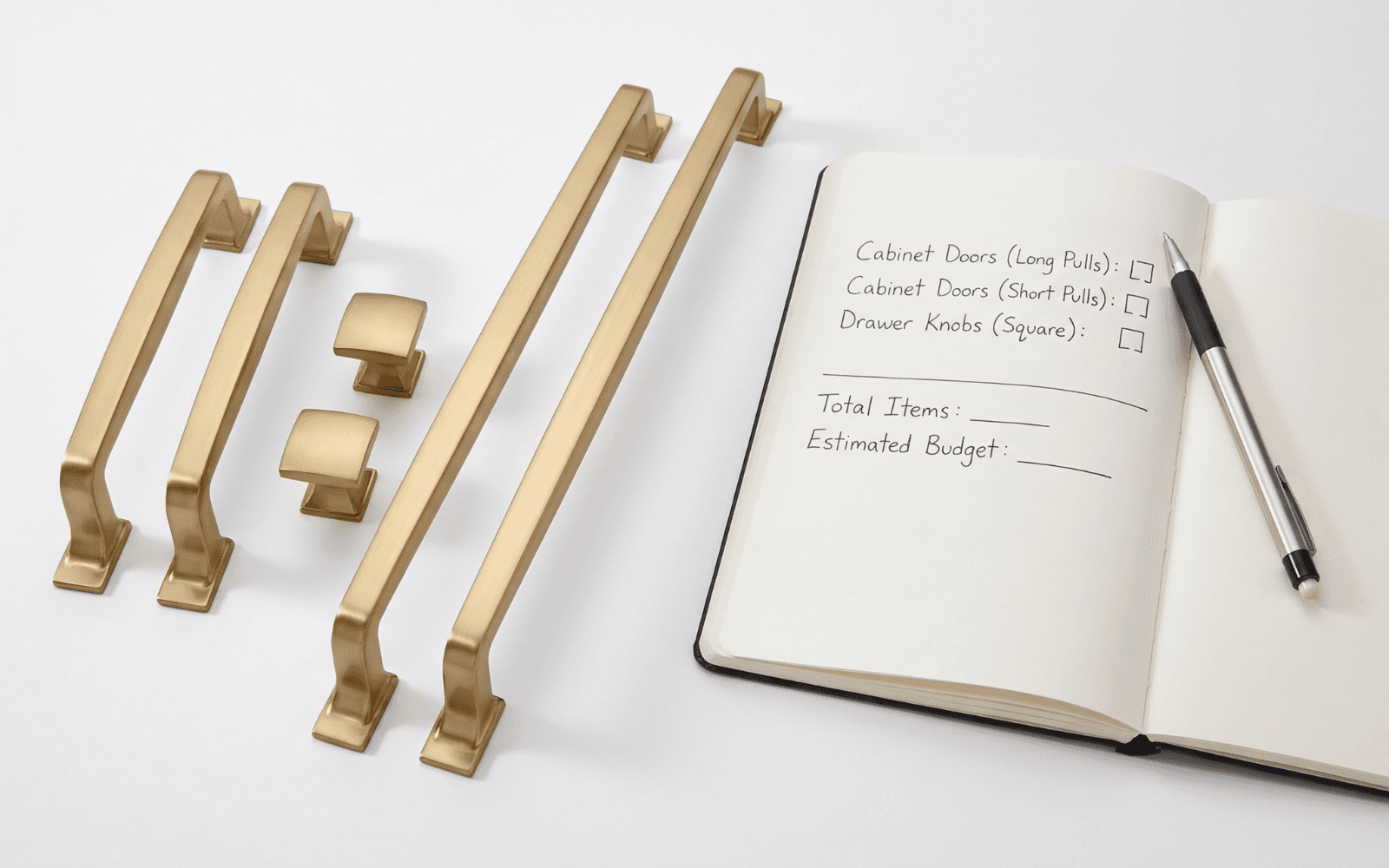
Compare Three Hardware Types
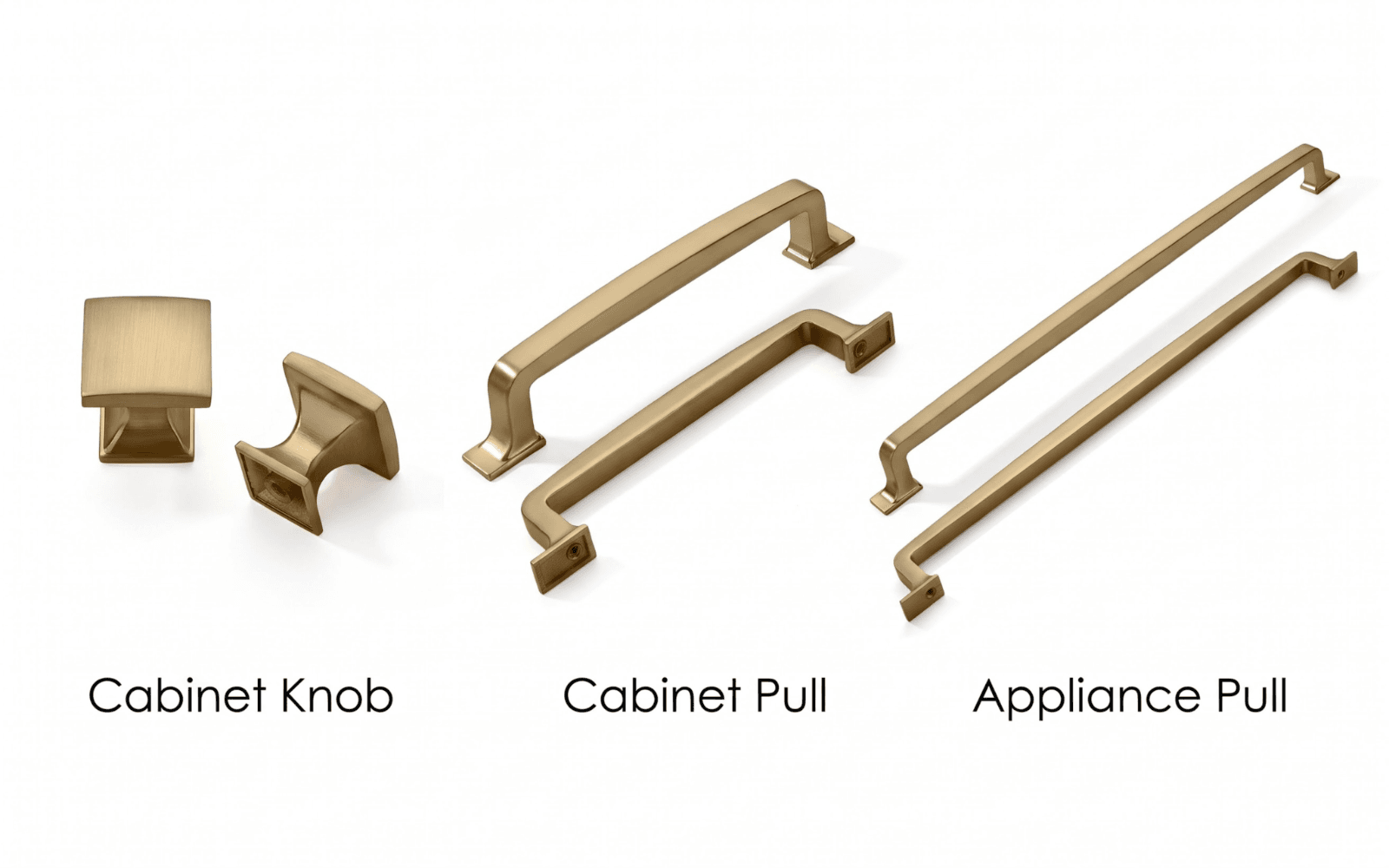
Cabinet Knobs
Compare cabinet knob options for doors and drawers where a compact grip suits the design. Check the diameter or overall dimensions, projection, mounting details, and finish. When replacing existing hardware, confirm the hole arrangement and whether the new knob will cover any visible marks.
Cabinet Pulls
Browse cabinet pull designs for a coordinated door and drawer layout. Distinguish CTC from overall length: matching the existing holes requires the correct hole spacing. Budget each selected size and pack separately, especially when wider drawers use a different pull length.
Appliance Pulls
Review appliance pull options as a separate budget line for suitable integrated appliance panels. Confirm the application, dimensions, mounting method, panel construction, and appliance manufacturer’s requirements. Do not substitute a standard cabinet pull solely because it has a similar shape or finish.
Understand the Cost Drivers
Prices can vary with product type, overall size, construction, finish, pack quantity, and design detail. Choosing several lengths or finishes can also mean ordering extra samples and buying separate packs.
Compare like with like. Use the price for the exact finish, size, and pack you plan to order, rather than the lowest price displayed on a listing card. Finishes with similar names may look different in person, so compare samples if you are matching existing hardware.
Calculate Cost per Installed Opening
Calculate the total hardware purchase cost from the packs you actually need to buy. If a pack contains more pieces than the project requires, include the whole pack price in the budget and record the spare pieces separately.
Cost per installed opening = (hardware purchase cost + required mounting components + shipping + applicable tax + installation) ÷ completed openings.
Use this as a project average. For comparisons between hardware types, calculate the same figure separately for knobs, cabinet pulls, and appliance pulls. Confirm what is included in each pack before adding mounting components, so the same item is not counted twice.
For example, if you need 23 pulls and they come in packs of 10, budget for three packs. You will pay for 30 pulls and have seven spares. Use the full three-pack total when comparing that option with another pack size.
Add Samples and a Contingency
Before placing a large order, try a sample on an actual cabinet front. Look at it in daylight and with the room lights on. Check that your hand fits comfortably behind the pull and that nearby doors can open without hitting it.
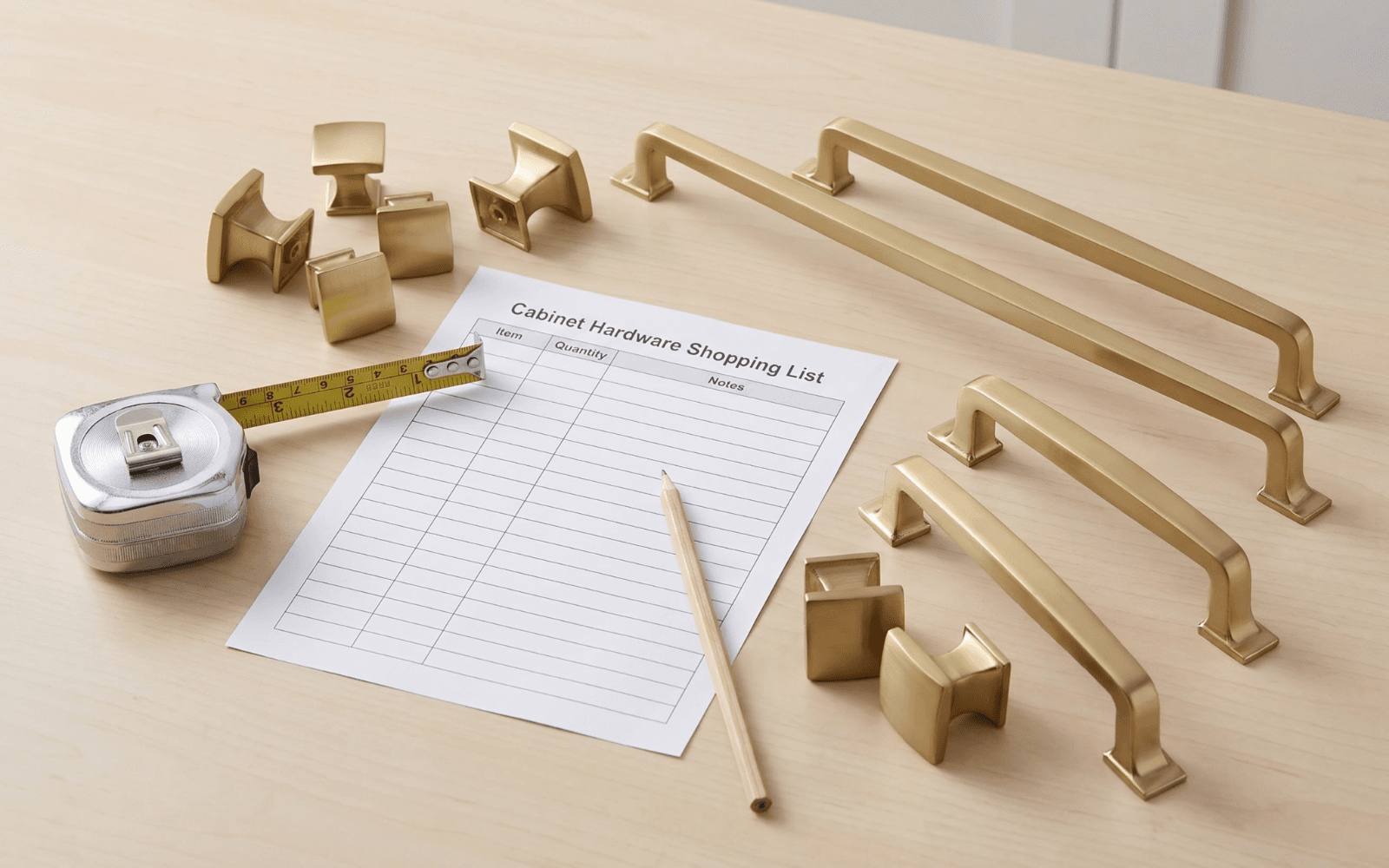
Add a contingency appropriate to your project for later cabinet changes or additional pieces. Keep shipping, installation, and possible return costs visible as separate lines. Check current policies before ordering, including any restrictions or costs that could affect your chosen delivery destination.
Compare Value Across the Whole Room
Consider how the hardware fits, feels in your hand, and looks alongside the rest of the room. A lower unit price may lead to a higher project total if the product requires extra work, leaves existing holes exposed, or needs to be replaced after installation.
Lay out your choices together before ordering. A knob you like on its own may look too small next to a long drawer pull. Check the combination in the room as well as the price.
Create Three Budget Scenarios
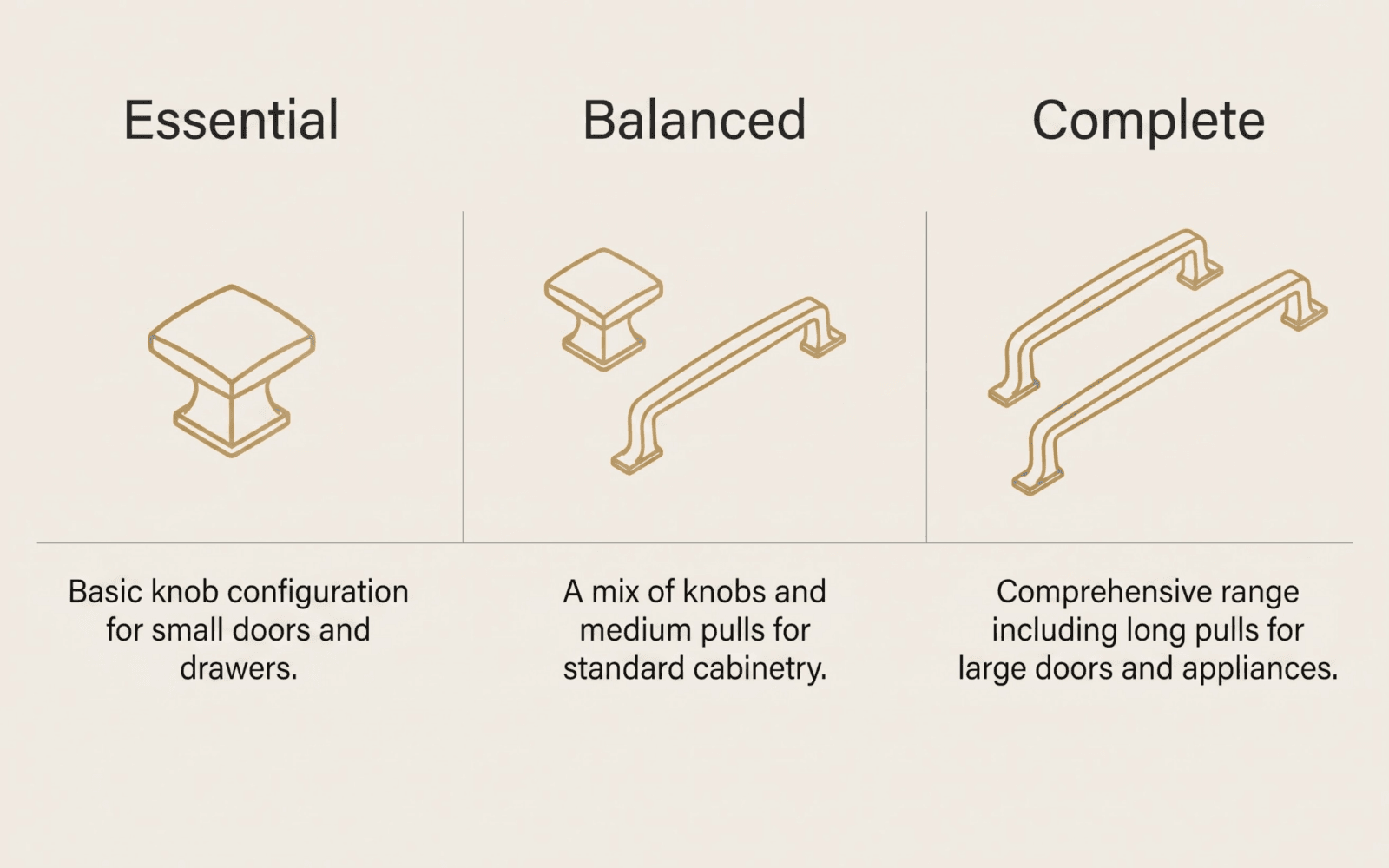
These examples show different hardware combinations. Include any required appliance pulls in every budget.
- Essential: Use one coordinated knob or cabinet pull design where it works comfortably. Include all required openings and any appliance hardware the project needs.
- Balanced: Combine cabinet knobs and cabinet pulls according to the layout, with appropriate sizes for each group of fronts. Keep required appliance pulls in the total.
- Complete: Choose the sizes you prefer throughout the room, adding appliance pulls where needed. Allow for samples, installation, and a little room in the budget for changes.
Keep the door and drawer count, delivery charges, and installation scope the same in all three versions. Change the hardware choices to see where the difference in cost comes from. Every version should include the appliance hardware your kitchen needs; you do not have to use all three product types.
Final Budget Check
Before placing the order, confirm the selected finish, size, pack quantity, price, availability, and included hardware. Check that the number of usable pieces covers the cabinet schedule and that any spare pieces are recorded.
Add delivery charges, applicable tax, installation, and sample costs without duplicating them. Date the budget so it is clear when prices were checked. If a cost is still unknown, confirm it before treating the total as final.
Frequently Asked Questions
How much does cabinet hardware cost for a whole kitchen?
The total depends on the number of openings, selected products, sizes, finishes, pack quantities, and installation scope. Build the estimate from your cabinet schedule and current product prices rather than applying a universal price range.
How do I compare pack prices fairly?
Divide the selected pack price by its stated quantity to compare the price per piece. Then calculate the number of complete packs you need to buy. Your actual purchase total may include spare pieces, so unit price alone is not the final project cost.
What should I confirm before ordering?
Confirm measurements, finish, quantity, mounting details, included components, and the intended application. For appliance panels or unclear specifications, share the exact product link and cabinet details with KHTUMEWARE before purchasing.
Plan Your Cabinet Hardware Budget
Once your quantities and measurements are settled, the budget becomes much easier to manage. Keep a product link, selected size, finish, and pack quantity beside each item so you can return to the exact option you priced.
Compare current cabinet hardware options at KHTUMEWARE to start your list.