November 21, 2026 · KHTUMEWARE Team
Cabinet Hardware Ideas for White Shaker Cabinets
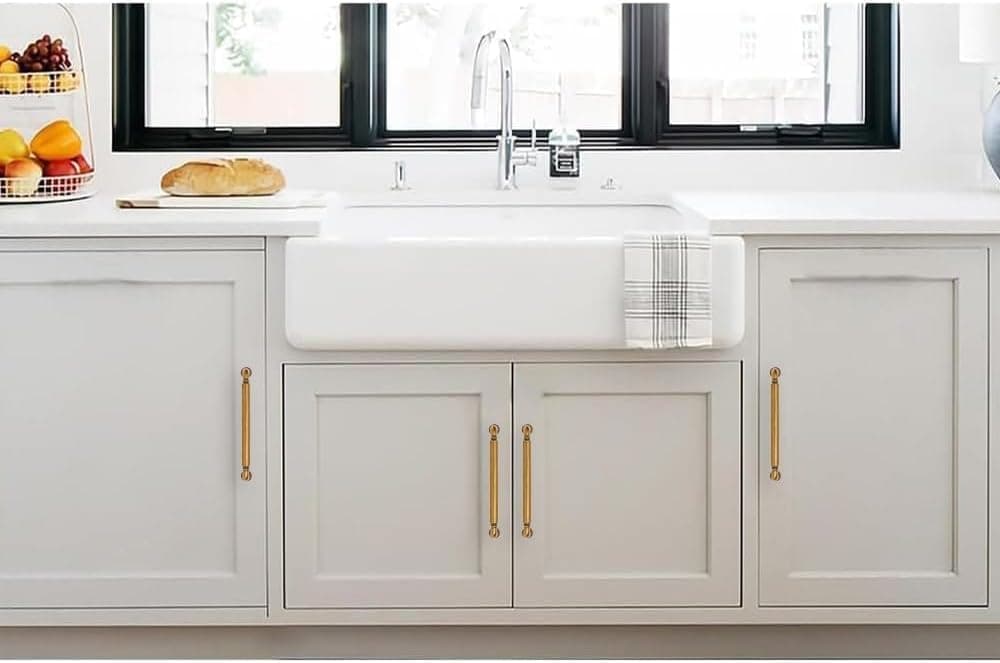
For white Shaker cabinets, round knobs on doors and bar pulls on drawers are a good place to start. Champagne bronze warms up creamy white paint, matte black gives bright white doors a sharper outline, and brushed nickel works well if you want the hardware to blend in. If you're replacing existing pulls, measure the screw holes before you settle on a finish.
Hardware finishes for white Shaker cabinets
Champagne bronze
Champagne bronze has a soft gold tone that sits comfortably next to creamy whites, pale oak and warm stone. It's worth looking at a sample beside the cabinet door in the evening. A warm bulb can make the same pull look more golden than it does by the window.
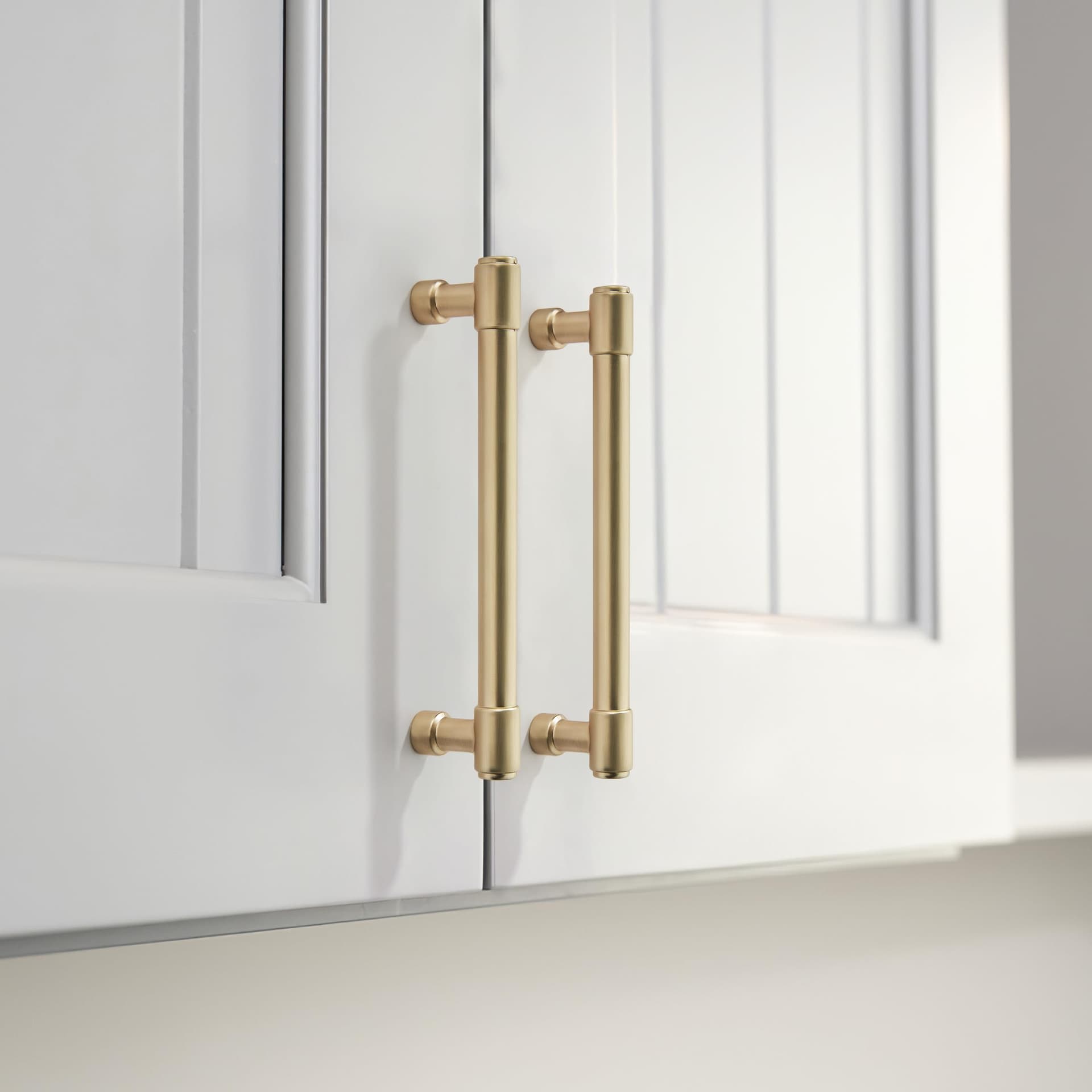
The Champagne Bronze 170038 bar pull is one example. A simple round knob in a similar shade is an easy pairing for the doors. If you're choosing the two pieces separately, hold them side by side before ordering.
Antique brass and unlacquered brass
Antique brass gives a white kitchen an aged look from the start. Unlacquered solid brass changes with use, so a knob on the door you open every morning may develop a different patina from one you rarely touch. If you like that variation, look at the 170280 round unlacquered solid brass knob or compare shapes in the solid brass cabinet hardware collection.
Matte black
Matte black stands out from white paint, so small differences in placement are easier to see. If you already have a black light fixture or window frame, a black pull can pick up that detail. Try holding one against two adjacent doors before committing to a full row. You can compare shapes in the matte black hardware collection.
Brushed nickel and polished nickel
Brushed nickel has a soft sheen and sits easily alongside many stainless steel appliances. Try a Brushed Nickel 170038 bar pull if you want the frame and paint color to get most of the attention. Polished nickel catches more light and can look slightly warmer than chrome. It's worth a look beside glossy backsplash tile or glass-front cabinets if you want the hardware to stand out a little more.
Knobs, bar pulls, and cup pulls
- Knobs on doors and pulls on drawers. Round knobs are compact on narrow door frames, while a bar pull gives you more room for your fingers on a drawer you open often.
- Pulls throughout. Use vertical pulls on doors and horizontal pulls on drawers. Keep the profiles related and try a longer pull on a wide drawer if a short one looks small or gives you too little room to grip.
- Mostly knobs. This can suit a small kitchen or a freestanding hutch. For a wide or heavy drawer you open one-handed, test a bar pull before deciding.
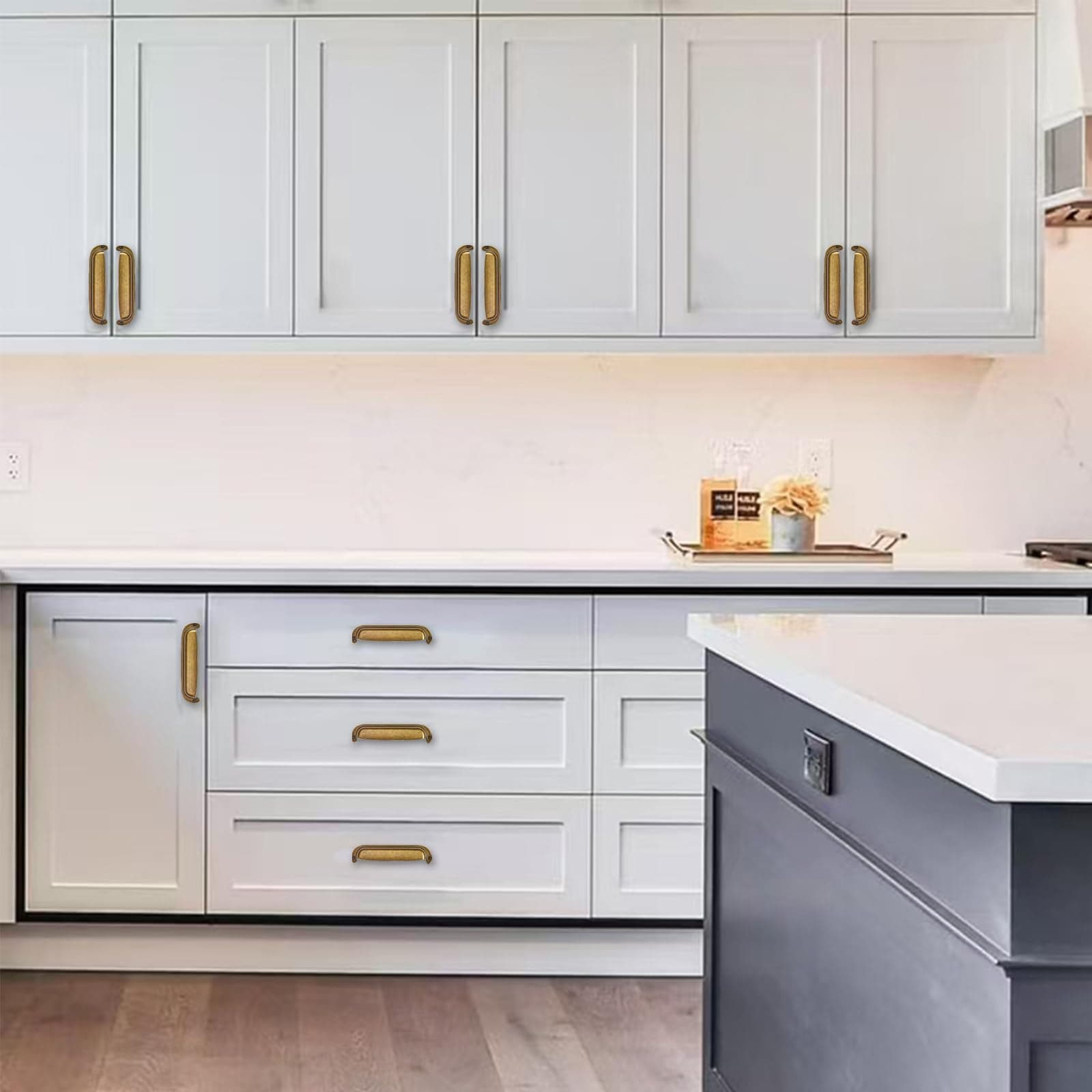
Cup pulls, sometimes called bin pulls, suit drawers and have more of a furniture feel. Check that you can comfortably hook your fingers underneath, especially on a deep drawer. Try the 170354 Antique Brass cup pull with a round knob on the doors. The cabinet pulls vs. knobs guide has more on grip and mounting.
How to size and place hardware on Shaker cabinets
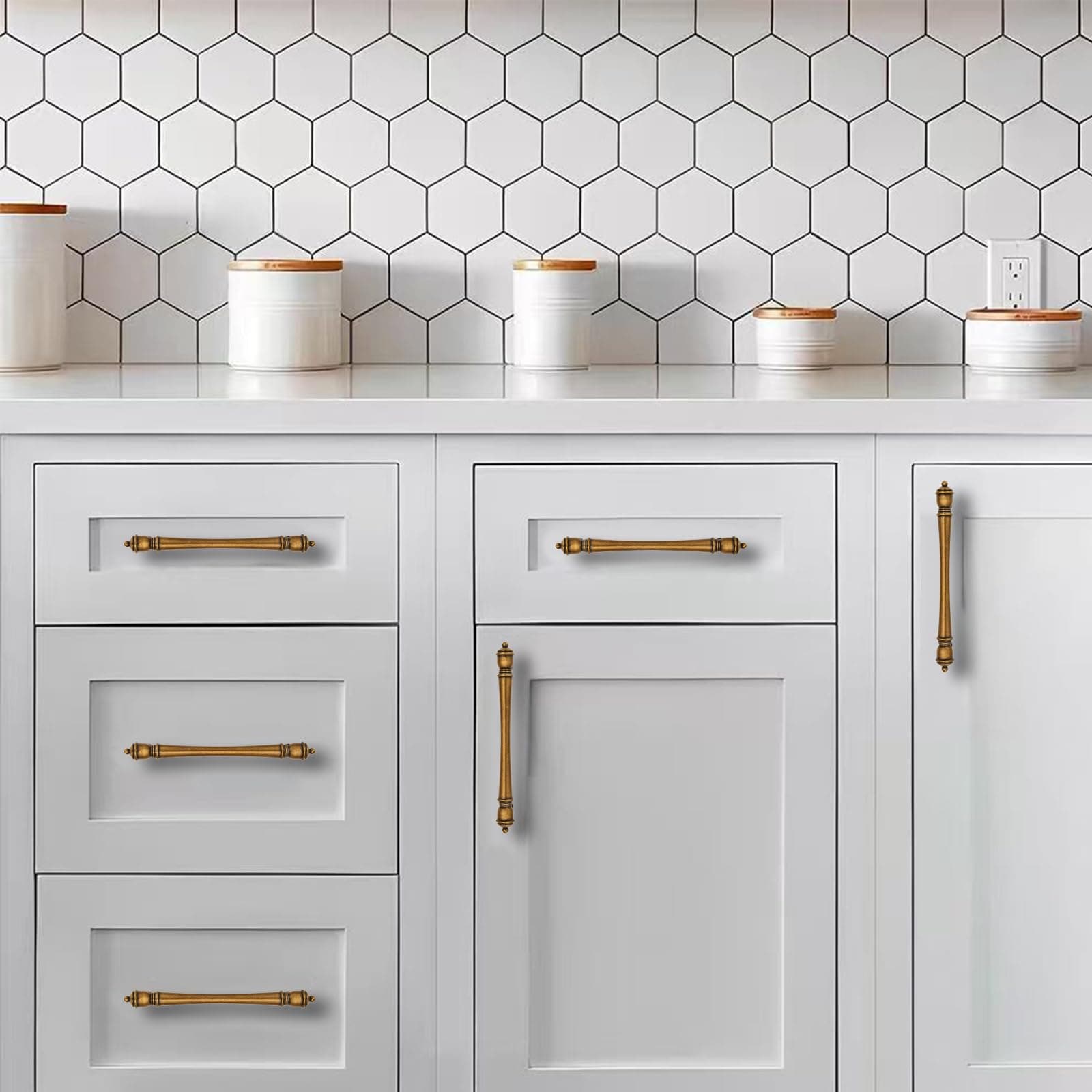
On a Shaker door, the vertical frame pieces are the stiles and the horizontal pieces are the rails. A common starting point is the stile opposite the hinges, near the bottom corner of an upper door and near the top corner of a base door. Hold the knob or pull against the frame first. Its base should sit flat, and you should have enough room to grip it without catching your fingers on the frame.
On a drawer, start by marking the horizontal center with painter's tape. Try the pull at the center of the front or on the upper rail if the rail is wide enough to support the mounting points. Step back to see how the marks line up across the drawer bank. On a wide drawer, consider how heavy it is when loaded and how you normally open it before you decide between one longer pull and two shorter ones.
Measure existing screw holes first
Center-to-center spacing, or CTC, is the distance between the centers of the two screw holes. If your existing holes measure 96 mm center to center, look for a pull listed at 96 mm CTC and check that its feet cover the old marks. The pull's full length can be different. See how to measure cabinet pull CTC for a step-by-step guide.
If you're drilling new holes, mark one door and one drawer first. Check the back of each front for clearance, confirm the screw length suits the thickness, and use a drilling template once you're happy with the placement.
Hardware for appliance panels and pantry doors
Choose handles for panel-ready refrigerators and dishwashers using the appliance manufacturer's installation instructions. Check the mounting method, clearances and handle requirements for your model before choosing an appliance pull. For a tall pantry door, hold the pull at a height that feels comfortable and check the grip before you mark the holes.
Try a sample in your kitchen
Put a knob and a pull against the actual cabinet finish and look at them in daylight and with the kitchen lights on. Try the pull on your most-used drawer and check how much room you have for your fingers. Once you've settled on the layout, count the pieces by size and finish. Then check the pack quantities, hole spacing and included screws for each item before ordering.
Frequently asked questions
Can I swap cabinet knobs for pulls without drilling?
A typical knob uses one screw and a typical pull uses two. A straight swap usually means drilling at least one new hole. Before marking it, check whether one existing hole can be reused while keeping the pull centered and both mounting points on a suitable part of the front.
Can a backplate hide old screw holes?
It can if the plate covers the old holes or marks and works with the new knob or pull. Measure the area you need to cover and check the plate's mounting hole spacing, how flat it sits on the cabinet and whether the screws still reach through.
Browse cabinet pulls and cabinet knobs by finish, then check the dimensions and pack quantity on the selected product page.