November 6, 2026 · KHTUMEWARE Team
How to Clean and Maintain Different Cabinet Hardware Finishes
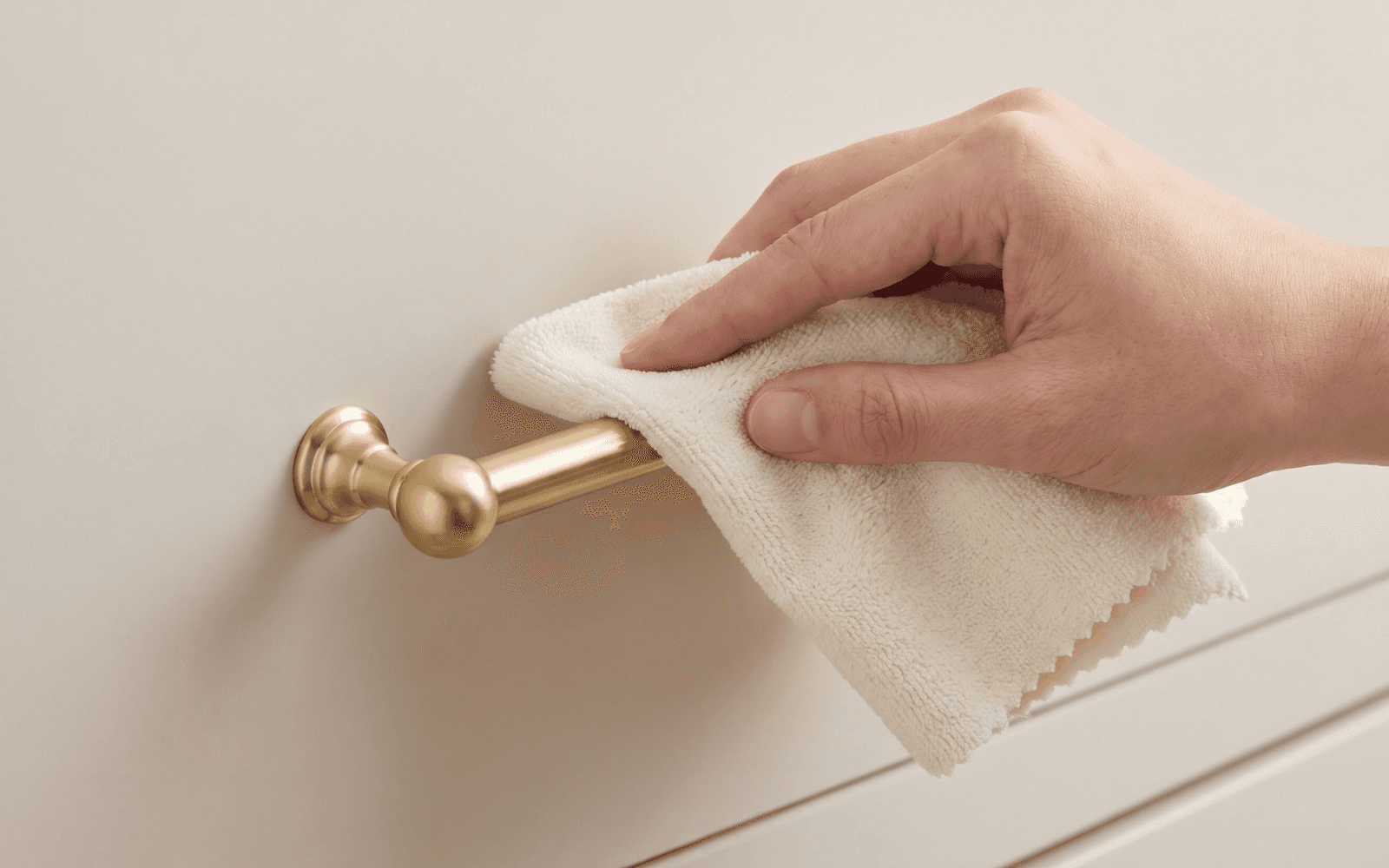
How to clean cabinet hardware: start with the finish
Knowing how to clean cabinet hardware starts with identifying its finish. A method that removes fingerprints from one surface may change the sheen or appearance of another. Treat cabinet pulls and knobs as finished surfaces, rather than assuming that every metal-looking piece can be polished in the same way.
Check the exact product page and current finish care notes before cleaning. A finish name describes appearance; it does not, by itself, confirm the base material, coating, or suitable cleaner. If the instructions are missing or conflict, ask our team for product-specific guidance before using a new method.
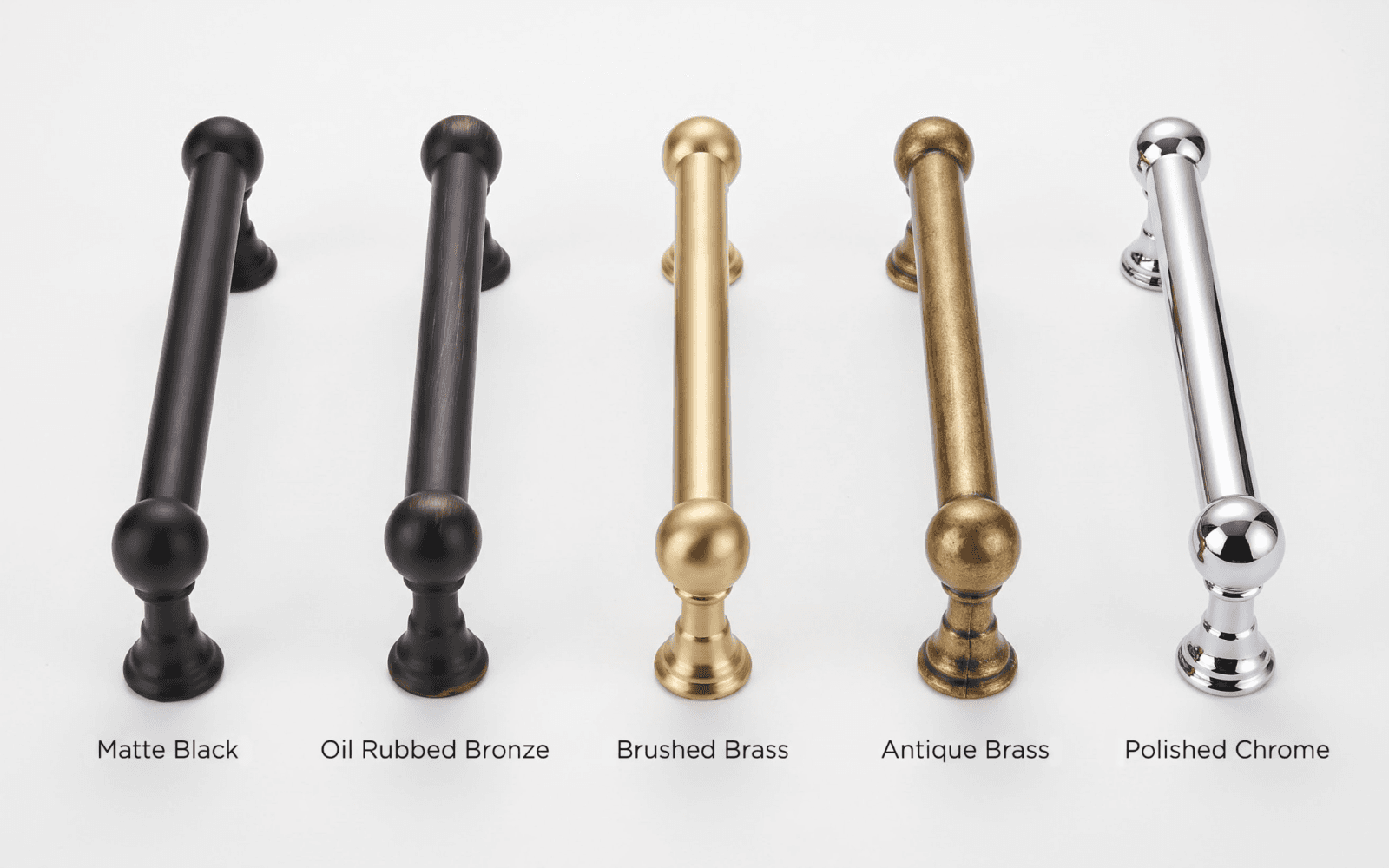
The safest basic routine
- Begin with clean, dry hands and a clean, soft, non-abrasive cloth. Gently lift away loose dust without pressing grit against the surface.
- Follow the instructions for your selected product and finish. Use a damp cloth or mild cleaning solution only when those instructions allow it, and use the smallest amount needed.
- Test an approved method on a small, inconspicuous area before treating all the hardware. Check the result before continuing.
- Dry promptly after any permitted damp cleaning. Do not soak hardware or leave liquid around mounting points, joints, or cabinet edges.
Use a separate clean cloth for hardware instead of one already used with kitchen sprays or polish. Cleaner residue on a cloth can reach the finish even when no new cleaner is applied.
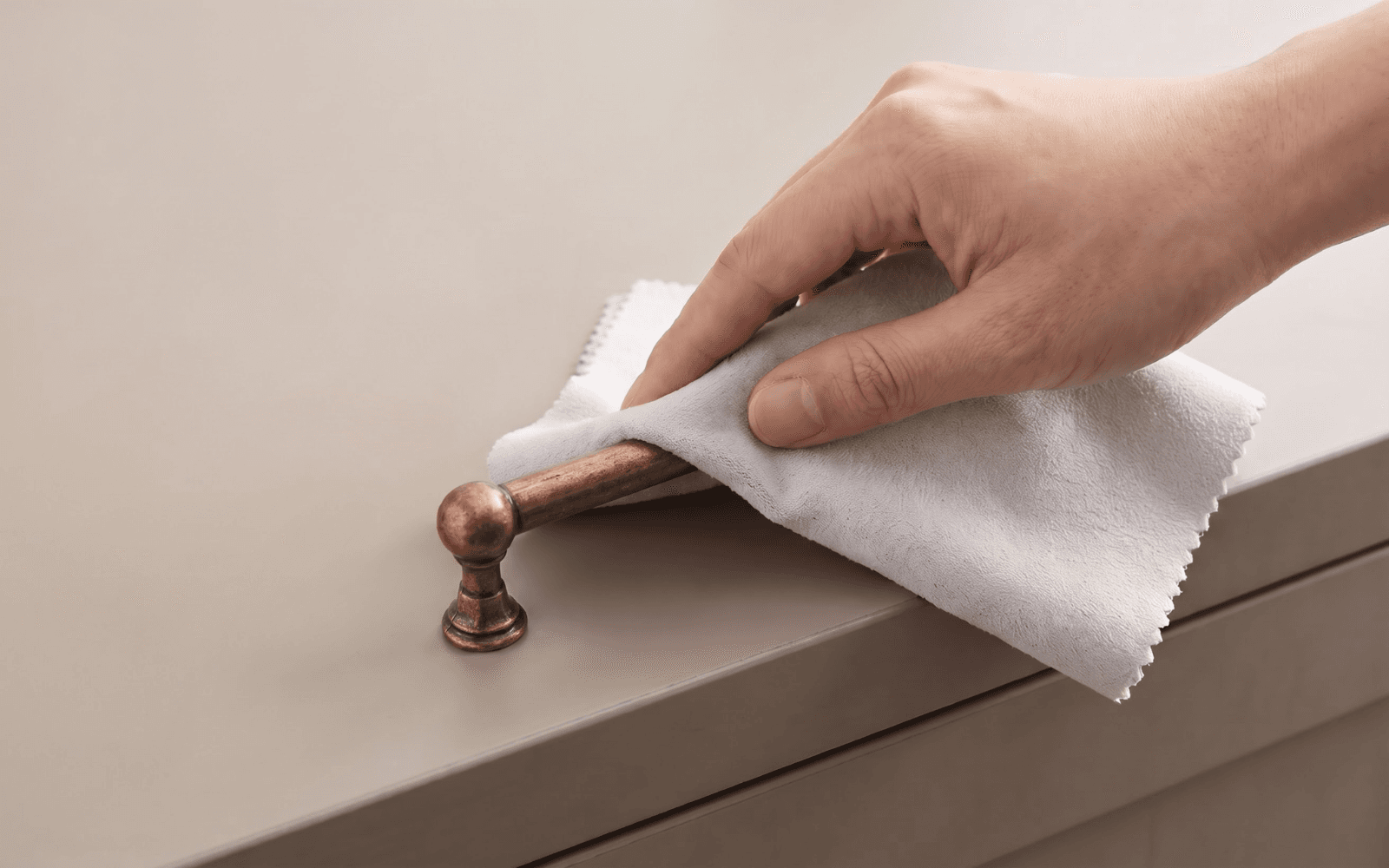
Care notes for five cabinet hardware finishes
KHTUMEWARE’s finish comparison page provides the following care guidance. Always check the selected product’s instructions as well, especially before introducing moisture or a cleaning solution.
Matte Black
Wipe with a soft, dry cloth and avoid abrasive cleaning tools. Keep the motion gentle; repeated rubbing is not a substitute for an approved cleaning method.
Brushed Brass
Remove dust regularly and avoid ammonia-based cleaners. A brass-colored finish does not mean that a metal polish intended for bare brass is suitable.
Oil Rubbed Bronze
Use a soft cloth and avoid scrubbing the highlighted edges. These contrasting areas contribute to the finish’s appearance, so do not try to make every part look uniformly dark.
Antique Brass
Wipe gently and preserve the aged character. KHTUMEWARE’s finish page notes that patina character is expected; do not assume that darker decorative areas need to be polished away.
Polished Chrome
Use a clean microfiber cloth to help reduce fingerprints. Make sure the cloth is free of trapped particles before wiping the reflective surface.
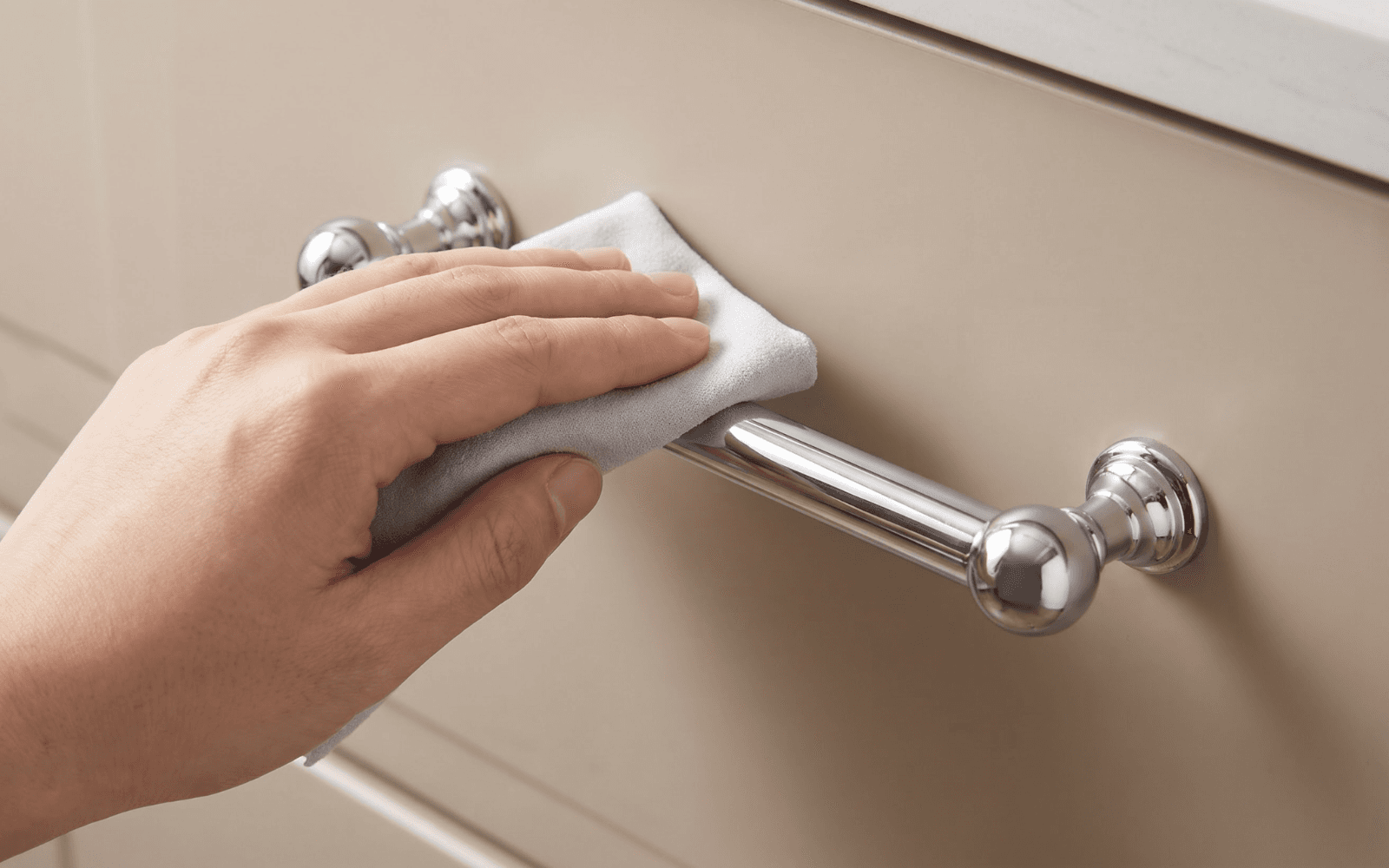
For help identifying the appearance you selected, read how to choose and understand hardware finishes. Appearance alone does not establish a cleaning method.
What not to use without approval
Avoid abrasive pads, steel wool, metal polish, bleach, ammonia, acidic cleaners, solvent cleaners, and concentrated degreasers unless your product’s care instructions expressly allow them. Do not scrape dried residue with a hard tool or mix cleaning chemicals.
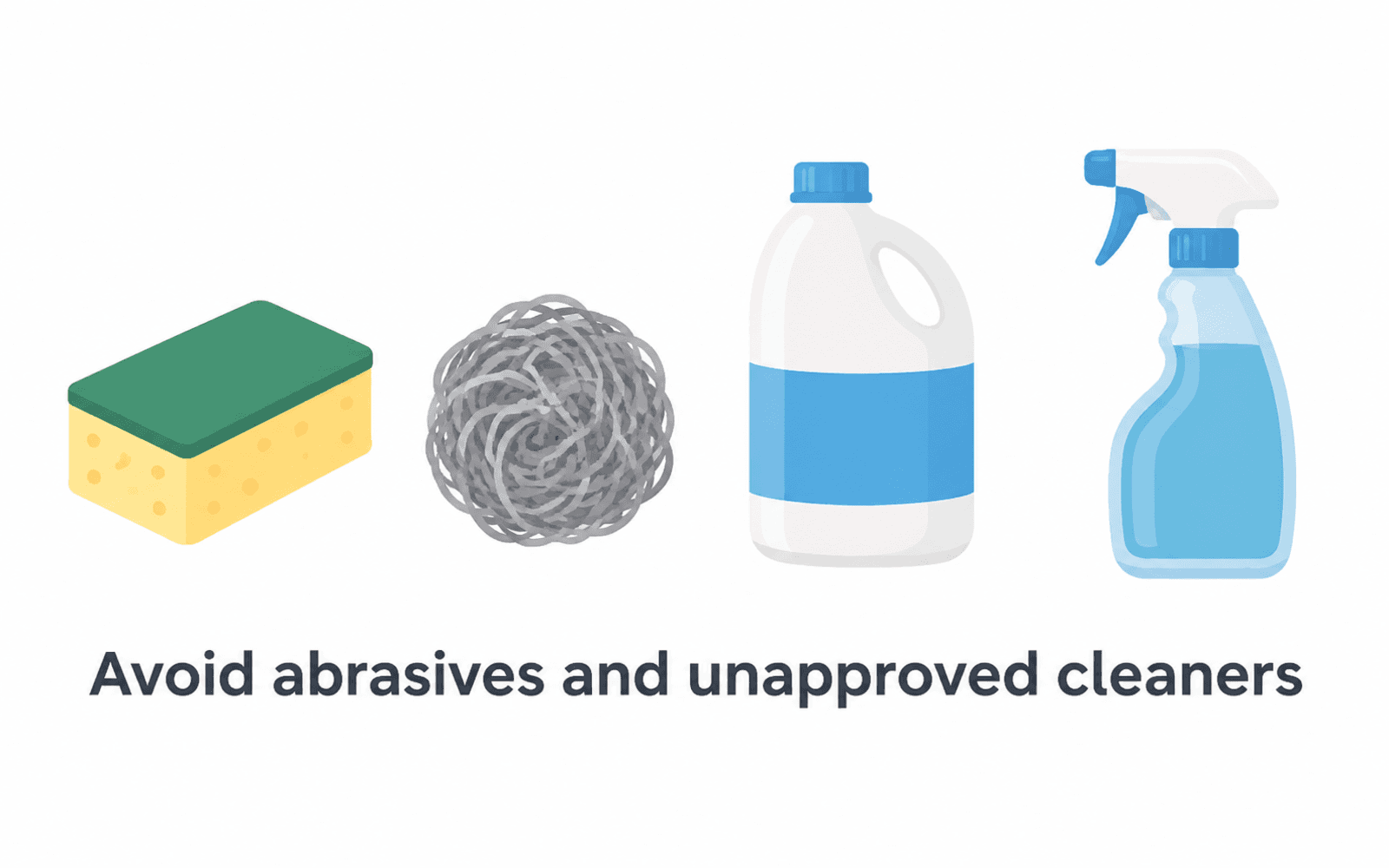
Paint, adhesive, construction dust, and stubborn grease require extra care. Photograph the residue and ask for advice before treatment. Repeated scrubbing can turn a small cleaning problem into a visible finish change.
Clean by room and actual use
Frequently touched kitchen drawers may need gentle dust and fingerprint removal more often than a display cabinet. In bathrooms and laundry rooms, inspect for moisture and avoid letting water remain around hardware or mounting points.
Base your routine on actual use rather than a universal weekly schedule. Light, regular care is easier to control than an occasional aggressive restoration attempt. Make sure everyone who cleans the room knows which cloth and method are approved.
Keep a finish care record
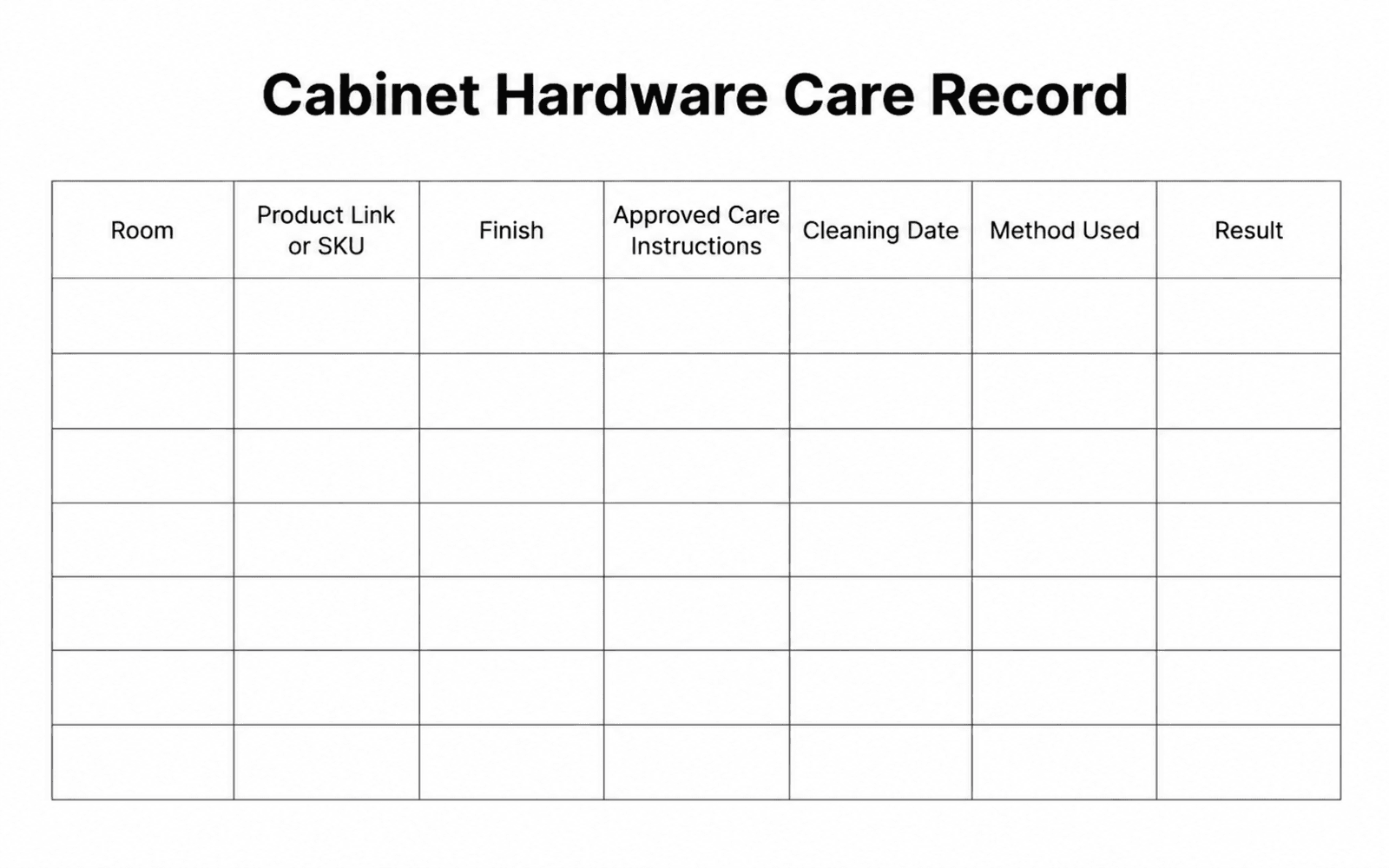
Record the room, product link or SKU, finish name, approved care instructions and their source, cleaning date, method used, and result. Keep before-and-after photos when trying a newly approved method.
For a multi-room project, share one agreed care record with the household, cleaner, or facilities team. Keep different finishes listed separately so instructions for one product are not accidentally applied to another.
When to stop cleaning
Stop if you notice unexpected color on the cloth, a change in sheen, a tacky surface, or new spots. Do not keep rubbing or switch to a stronger cleaner to correct the change.
Photograph the affected area in natural light. Save the product link, finish name, order details, and the cleaner or method used so our team can review the situation.
Frequently asked questions
Can I use soap and water on every finish?
No. Use soap, water, or a damp cloth only when the selected product’s care instructions permit them. Do not extend instructions for one finish to all cabinet pulls and knobs.
Can I polish antique or brass-colored hardware?
Do not assume that you can. A decorative brass finish may differ from bare, uncoated brass, and polishing may alter its appearance. Confirm the exact product and approved method first.
How should I handle stubborn marks?
Stop after gentle, approved care fails. Send clear photos and the exact product information to our team before trying a stronger cleaner, abrasive tool, or restoration treatment.
A simple routine to keep
The practical answer to how to clean cabinet hardware is to identify the finish, check the instructions, use a clean soft cloth, and avoid unverified chemicals or abrasives. Test any newly approved method first and document the result.
Need help with a specific pull or knob? Ask a product care question and include the product link or SKU, finish name, and clear photos.