November 11, 2026 · KHTUMEWARE Team
Where to Place Cabinet Pulls and Knobs on Doors and Drawers
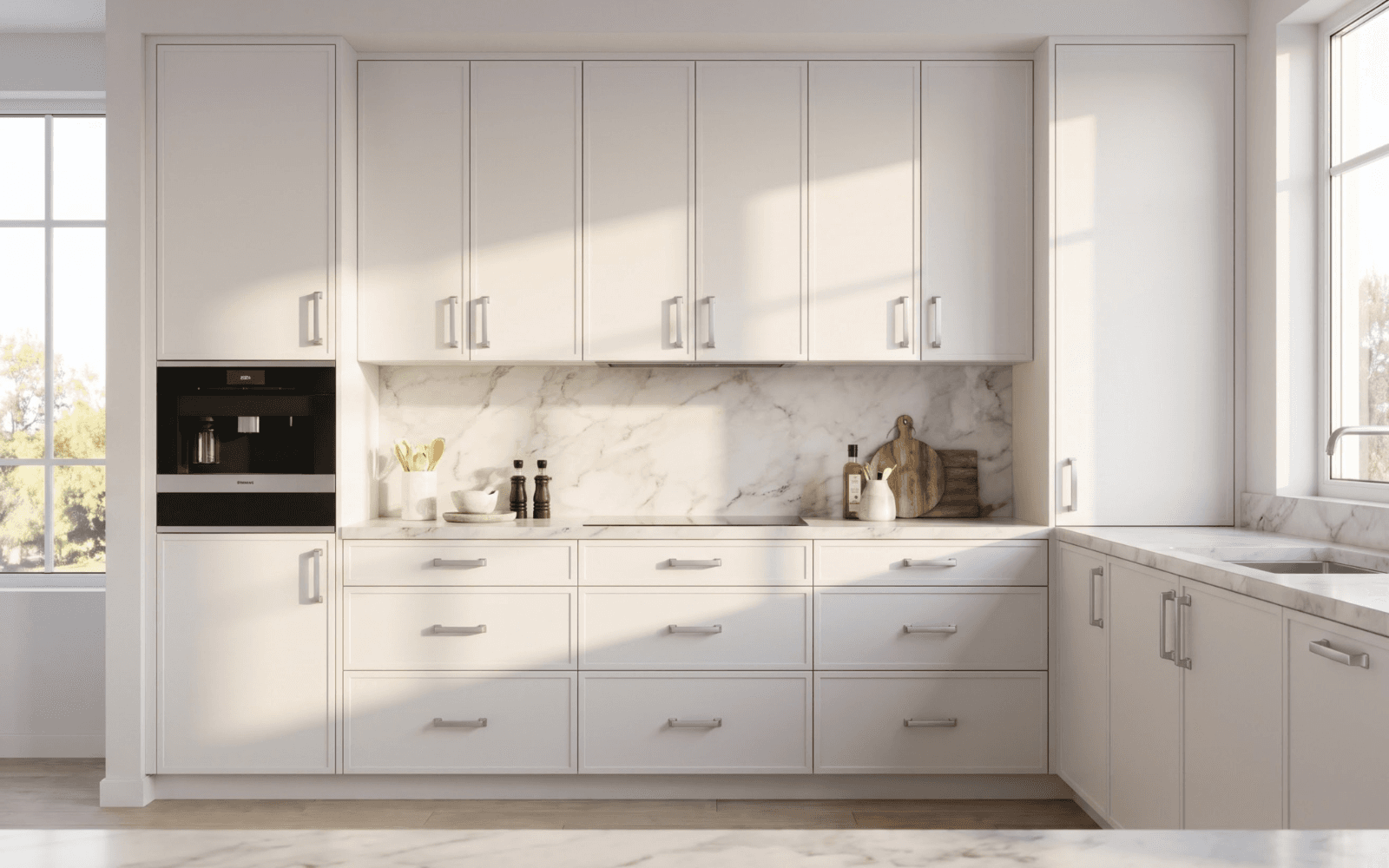
On hinged cabinet doors, place pulls and knobs near the edge opposite the hinges. Use the lower corner on wall cabinets and the upper corner on base cabinets as starting points. On most drawers, start at the center of the drawer front. See Cabinet Pulls vs Knobs for help choosing a hardware type and How to Choose the Right Pull Size for sizing.
Start with the opening side
On a hinged, framed cabinet door, place the hardware on the solid stile on the side opposite the hinge. On a slab door, simply position the hardware near the edge opposite the hinge.
A left-hinge door takes the hardware on the right side. A right-hinge door takes it on the left side. On a pair of doors, mirror the placement: each piece sits toward the center gap, still on its own opening side. On tall pantry doors, test the grip height with the people who use the cabinet and repeat it across matching doors.
Place hardware on cabinet doors
Use one point on the opening-side stile, then repeat that point on every door of the same height. A common kitchen layout puts base-cabinet doors toward the top corner and wall-cabinet doors toward the bottom corner. Both then sit nearer counter height.
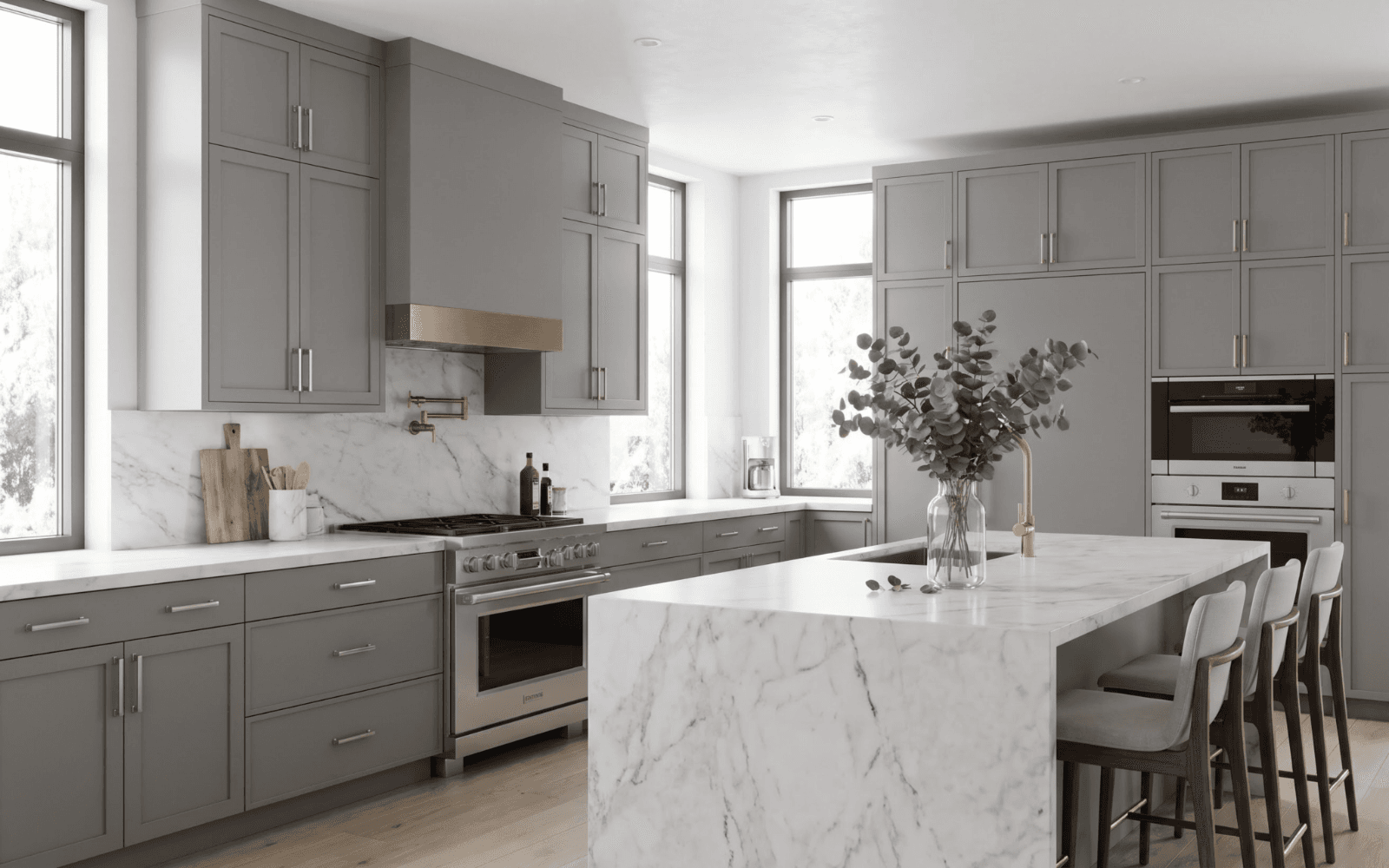
Measure from the edge of the door itself. On a framed door, choose a horizontal position on the solid opening-side stile. On a slab door, measure in from the edge opposite the hinges. Then choose the vertical position from the top of a base-cabinet door or the bottom of a wall-cabinet door. For a knob, mark the center of its mounting hole. Check alignment within each group of matching doors with the doors closed.
For a vertical pull near a corner, mark the mounting hole closest to that corner first. Use the selected pull's center-to-center (CTC) measurement to mark the second hole along the same vertical line, toward the center of the door. See our guide on How to Measure Cabinet Pull CTC for help.
- A knob is installed at a single marked point. The 015AL round cabinet knob and the 170025 square cabinet knob are single-point pieces.
- The 170038 bar cabinet pull and 1204 arch cabinet pull are examples of pulls that can be installed vertically.
- For a horizontal pull, hold the actual pull or template in place and check that both holes fit the solid mounting area. The 213 bar cabinet pull is an option for this layout.
Place hardware on drawers
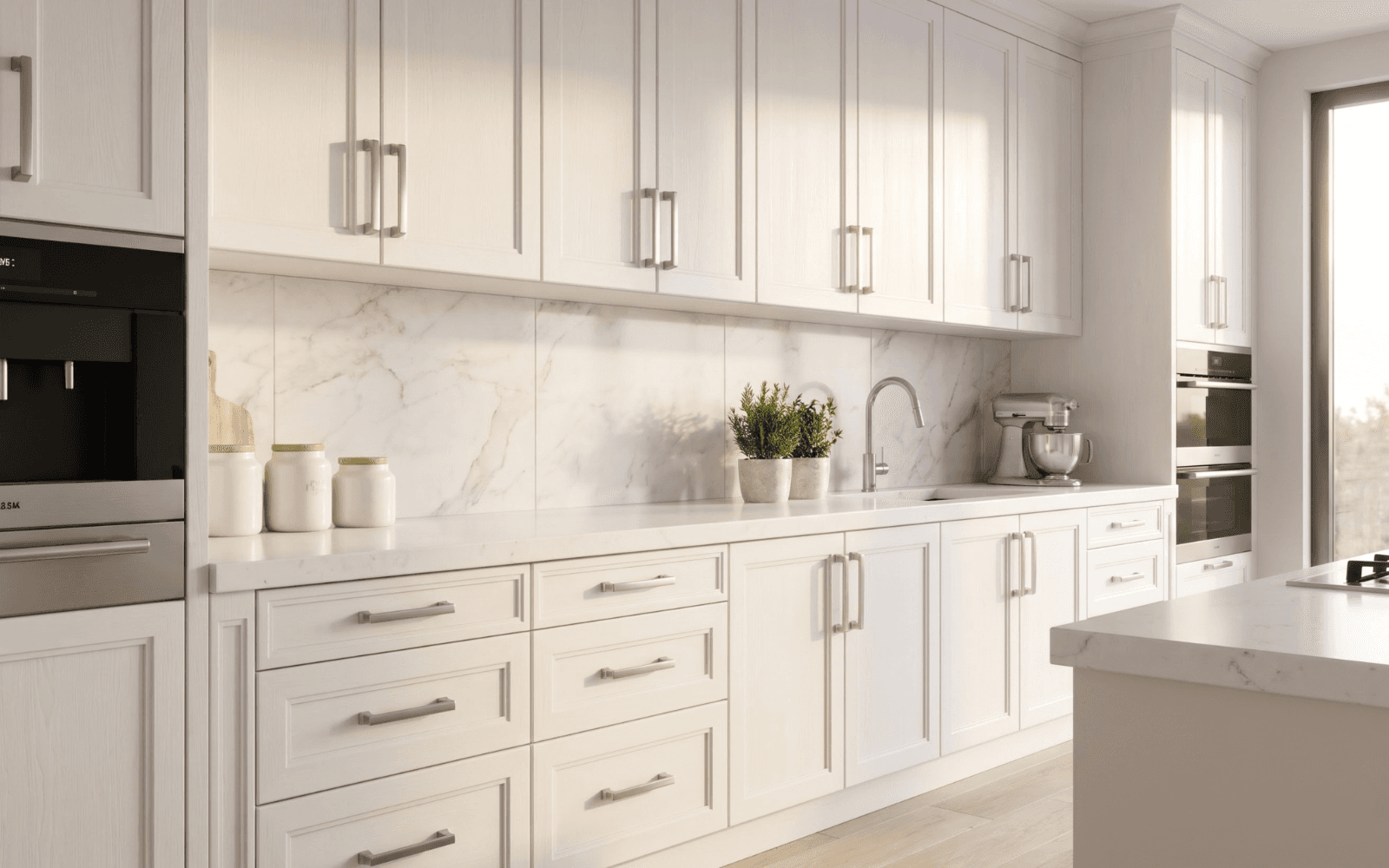
For a standard drawer, start at the center of the drawer front. Align a straight pull horizontally. For a cup pull, center it left to right and follow its mounting template, with the opening facing down. Center a single-hole knob at the chosen point and align shaped knobs, such as T-bar knobs, the same way across matching fronts.
- The 265 bar cabinet pull and 170354 cup cabinet pull are examples of horizontal pulls.
- The 264 T-bar cabinet knob should be aligned consistently across matching fronts.
On deep drawer fronts, try a position above the vertical center if it is easier to reach. For a one-piece layout, keep the hardware centered left to right. If you prefer two pulls on a wide drawer, start with their centers at roughly one-quarter and three-quarters of the front width, on the same horizontal line. Test the grip and clearance before drilling.
Mark every front before you drill
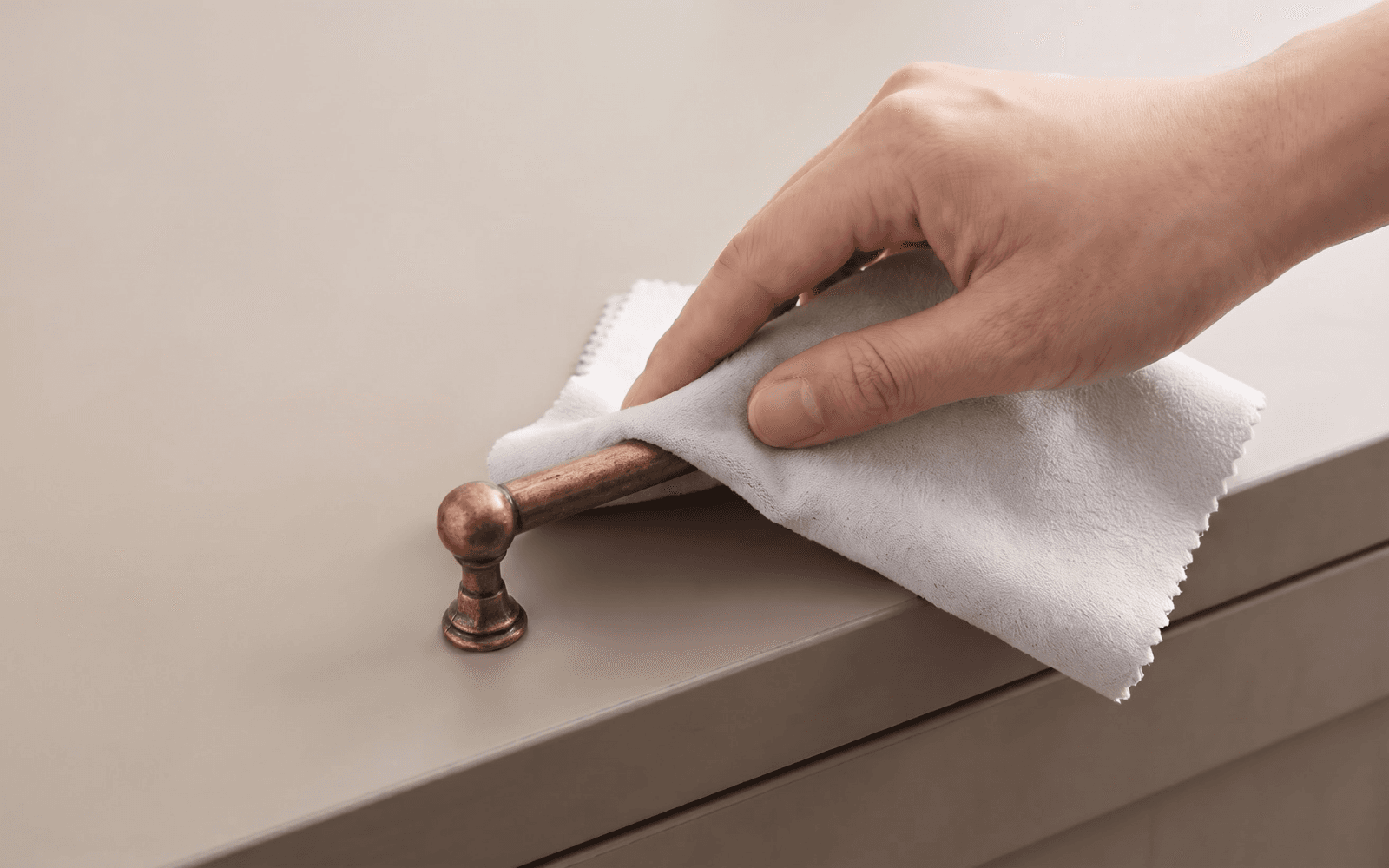
- Split the kitchen into groups: base doors, wall doors, tall doors, and drawers.
- Write down the edge offsets for each door group and the center rule for drawers.
- Mark every front with painter's tape or a template. Step back with the doors and drawers closed and look for a straight line.
- Confirm each mark is on the opening side, clear of the hinge, and clear of glass, a metal frame, or a panel joint.
- Drill only after the marks agree.
Before drilling, hold the actual hardware or template against the front. Check the back of the door or drawer for hinges, glass, joints, and obstructions. Confirm the screw length and hole spacing for the selected hardware, then test-fit one front before repeating the layout.
If you plan to reuse existing holes, match the hole count and, for two-hole pulls, the exact CTC to the replacement hardware. Measure the actual backplate footprint against any old holes or marks you want to cover. See How to Replace Cabinet Pulls and Knobs or learn about Cabinet Backplates. A backplate may help cover old marks, but only if its actual size and position provide sufficient coverage. Check the product dimensions.
Keep Matching Cabinets Aligned
- Matching doors use the same corner and offsets.
- Matching drawers use the same center.
- A pair of doors is mirrored, not copied onto the same side.
Frequently Asked Questions
Should a door pull be vertical or horizontal?
Usually vertical, on the opening-side stile. A horizontal door pull is optional, but you must confirm both holes and the base land on a solid mounting area.
Do upper and lower doors use the same corner?
Often no. Wall doors are commonly marked toward the bottom corner, and base doors toward the top corner, opposite the hinges.
Where should a pull go on a deep drawer?
Keep it centered left to right. Vertically, you can test-fit the pull slightly above the center line for easier reach.
When should one drawer have two pulls?
When one centered pull is hard to reach across a wide front. Space two pulls symmetrically and test the grip and operation before drilling. No single width makes a second pull mandatory.
Shop Cabinet Pulls and Knobs
Ready to finish your project? Browse our Cabinet Pulls and Cabinet Knobs to find the right style for your layout.